NVIDIA and Intel Forge Strategic Partnership for Custom x86 Processors
NVIDIA’s recent $5 billion investment in Intel marks a significant milestone in the semiconductor industry, as two of the sector’s leading companies join forces to develop custom x86 processors. This collaboration aims to deliver high-performance solutions across a wide range of market segments, leveraging the strengths of both organizations.
Manufacturing Strategy: TSMC Remains Central
One of the key questions following the announcement centered on manufacturing responsibilities. Intel traditionally manufactures a substantial portion of its products in-house, utilizing its own fabrication facilities, while also relying on TSMC for select production needs. In contrast, NVIDIA has exclusively partnered with TSMC for its contract manufacturing.
According to NVIDIA CEO Jensen Huang, this arrangement will continue for the new joint venture. During the press conference, Huang emphasized, “NVIDIA and Intel are both successful customers of TSMC. They are a world-class foundry and support customers of diverse needs. You can’t overstate the magic that is TSMC. But today, our partnership is 100% focused on the custom CPUs we are building for data centers that can connect to the NVIDIA AI ecosystem.”
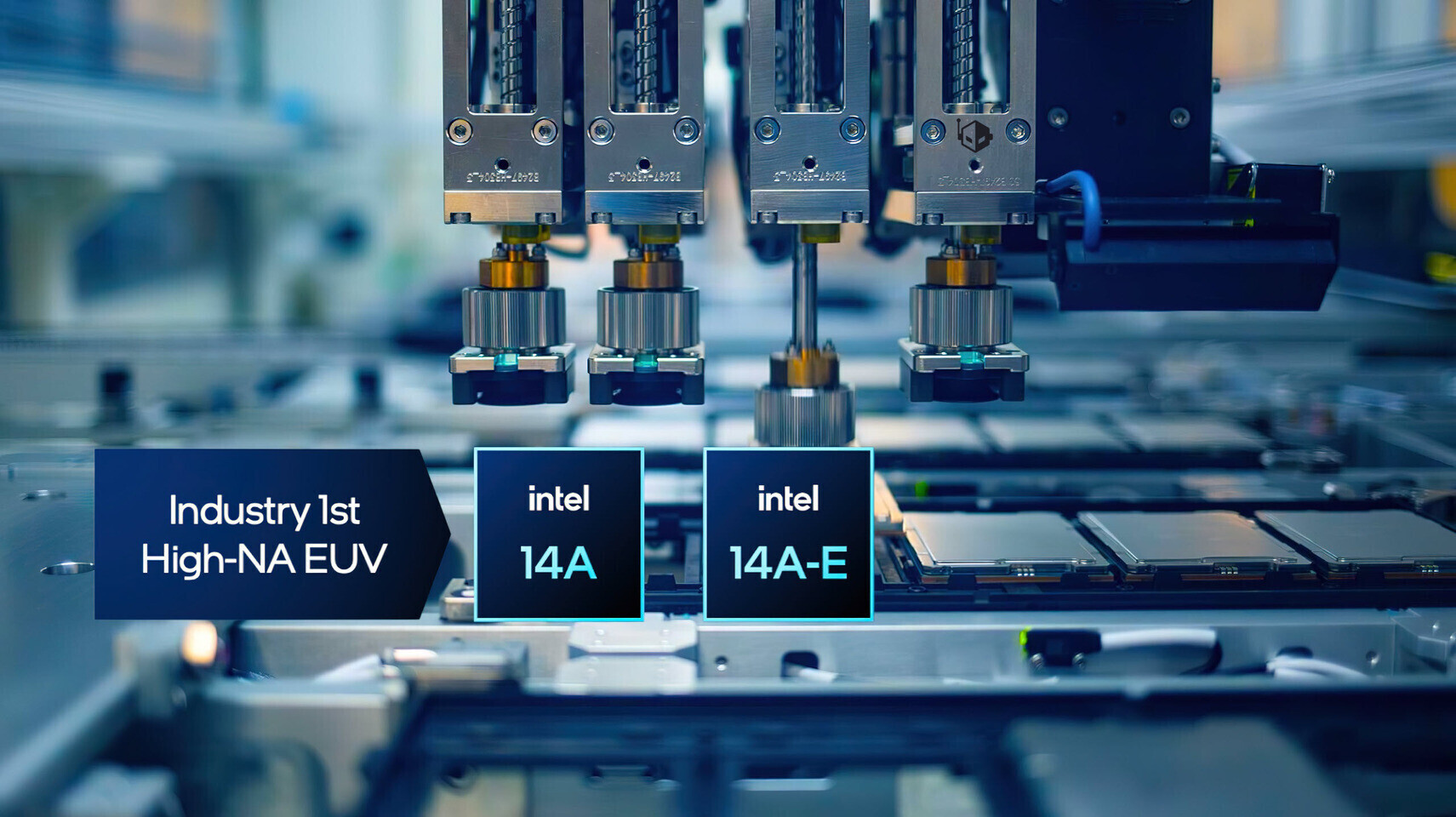
Intel CEO Lip-Bu Tan echoed this sentiment, reaffirming the company’s ongoing relationship with TSMC: “We both still have a lot of respect for TSMC, and we will continue to work with them.” Tan also highlighted Intel’s continued development of its own advanced process nodes, specifically 18A and 14A, noting, “We will still work on 14A and 18A and see if that can be used at some point in the future.”
Exploring Intel’s 14A Node for Future Collaboration
Recent industry reports suggested that NVIDIA was evaluating Intel’s 14A node for potential trial production. While trial production is distinct from high-volume manufacturing, it represents an important step in collaborative development. In this phase, NVIDIA is likely conducting early testing and providing feedback to Intel’s engineering teams, enabling further refinement of the 14A process before any large-scale deployment.
For now, NVIDIA’s data center product roadmap remains firmly aligned with TSMC’s manufacturing nodes for at least the next one to two years. However, the ongoing collaboration and testing with Intel’s 14A node could influence future consumer products or specialized components, such as networking ASICs, in the coming quarters.
This partnership between NVIDIA and Intel underscores the dynamic nature of the semiconductor industry, where collaboration and innovation are key to meeting the evolving demands of high-performance computing and AI-driven workloads.