Samsung Unveils Next-Generation CXL 3.1 and PCIe 6.0 Storage Solutions
At the 2025 Global Memory Innovation Forum in Shenzhen, Samsung announced significant advancements in enterprise storage technology, confirming plans to ship next-generation CXL 3.1 and PCIe 6.0 CMM-D storage products. Kevin Yoo, CTO of Samsung’s Memory Business Unit, provided a detailed roadmap for the company’s upcoming storage solutions, highlighting a focus on both performance and efficiency.
PM1763 Gen 6 SSD: Doubling Performance with Efficient Power Use
The Samsung PM1763 Gen 6 SSD is slated for release in early 2026. This new solid-state drive is expected to deliver approximately double the performance of its predecessor, while maintaining a power consumption of around 25 watts. This balance of high performance and energy efficiency is particularly relevant for data centers and enterprise environments where both speed and power management are critical.
Expanding Storage Capacity: 256 TB and 512 TB PCIe Gen 6 Drives
Following the launch of 256 TB Gen 5 SSDs in 2026, Samsung plans to introduce a 512 TB PCIe Gen 6 drive in the 1T EDSFF format around 2027. These high-capacity drives are designed to meet the growing storage demands of artificial intelligence research and large-scale data processing, where rapid access to vast datasets is essential.
Seventh-Generation Z-NAND and Memory-Class Storage
Samsung also revealed plans for a seventh-generation Z-NAND solution with GIDS, described as memory-class storage, scheduled for release in 2026. This technology aims to bridge the gap between traditional NAND storage and DRAM, offering faster data access for applications that require both speed and reliability.
Innovations in SSD Design and Cooling
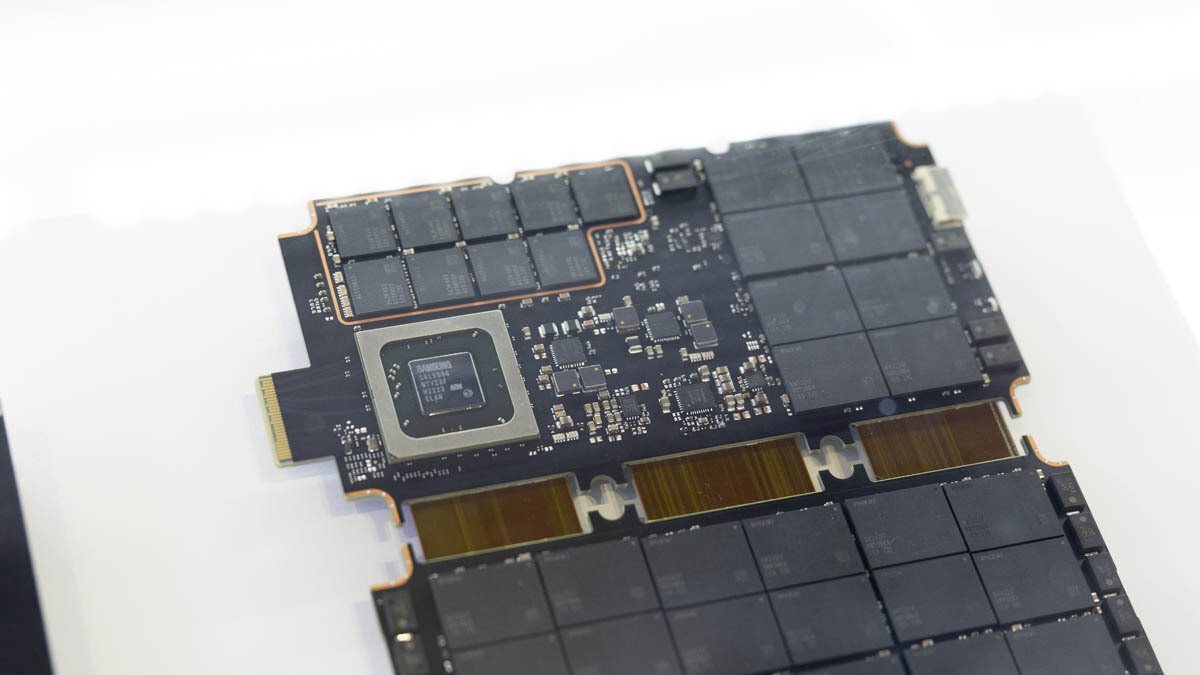
The company previously showcased its PM1763 256 TB SSD at the Future of Memory Storage 2025 event, demonstrating a working prototype that features a completely redesigned capacitor, controller, and DRAM layout. These design changes are intended to optimize cooling and enhance performance efficiency, addressing the unique challenges posed by high-capacity SSDs.
High-capacity solid-state drives are increasingly important for AI laboratories and data-intensive industries, as the volume of data required for training and analytics continues to rise. While Samsung has outlined an ambitious timeline for these storage solutions, specific release dates may be subject to change as the company continues to refine power and thermal management for these advanced drives.